literature
Science fiction's most popular literary writers from Isaac Asimov to Stephen King and Frank Herbert, and the rising stars of today.
The First Harvest
Chapter 4: The First Harvest The District of Rust smelled of wet iron and dying dreams, a sharp contrast to the sterile, pressurized air of the Vane Tower. I sat in the corner of a grease-slicked diner, my hands shaking—not from the cold, but from the low-frequency hum of the Static that had begun to chew at the edges of my vision. I needed a fix. Not the chemical stimulants of the Obsidian Room, but a different kind of grounding. I needed to see Elena Vane.
By Nathan McAllisterabout 3 hours ago in Futurism
The Social Execution. Content Warning.
I woke up six months later in a sterile room that smelled of bleach and lost hope. Consciousness didn't return all at once; it arrived in agonizing increments, a slow-motion reconstruction of a man who had been shattered into a million jagged pieces. For weeks, the world was nothing but the rhythmic hiss of a ventilator and the fluorescent hum of a ceiling I hadn't designed. When I finally found the strength to open my eyes, I didn't recognize the landscape of my own body.
By Nathan McAllistera day ago in Futurism
Of Entropy and Chaos
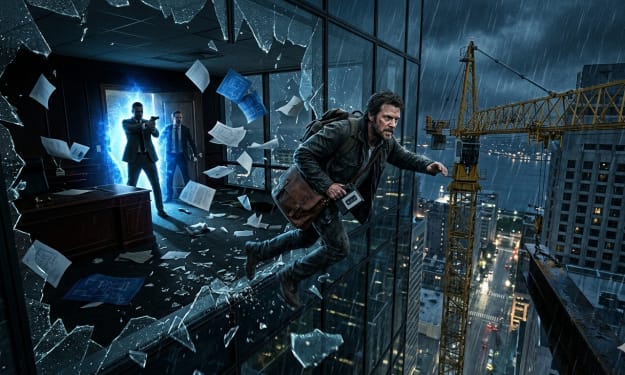
The entry point wasn't a door; it was a wound in the city’s municipal memory. I crouched in the shadows of a service alley three blocks from the Central Library, staring at a rusted ventilation grate that had been paved over by three decades of asphalt and apathy. This was the "Dead Zone." In the late 1990s, the city’s urban planners had suffered a collective seizure of budget cuts and bureaucratic oversight, leaving a three-block radius of the underground poorly mapped and even more poorly maintained. During the seismic retrofitting of 2014, while I was drafting the stabilization plans for the library’s sub-basements, I’d found the discrepancy. According to the city’s digital map, this space was solid earth—a dense pack of silt and basalt. According to my memory, and the yellowed blueprints I’d stolen from the archives, it was a pneumatic waste corridor.
By Nathan McAllister3 days ago in Futurism
The Silicon Mirror
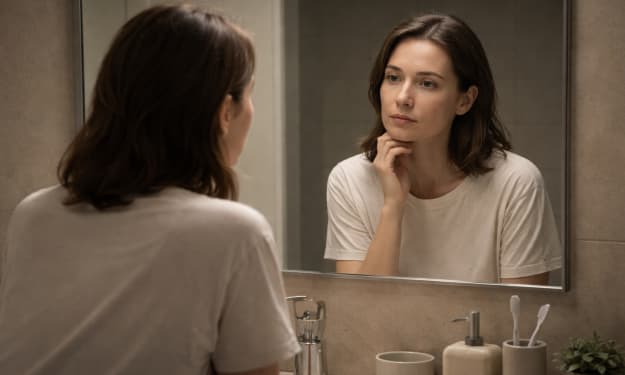
The blue light of your smartphone isn’t just illuminating your face in the dark; it is performing a digital excavation of your psyche. Every midnight scroll, every paused frame, and every "like" is a breadcrumb leading a cold, mathematical ghost back to your deepest insecurities. We have reached a critical point in human history where we no longer simply use the internet—the internet uses us to learn how to feel. We are the fuel in the engine of a consciousness we don't yet understand.
By Alex Sterling 6 days ago in Futurism
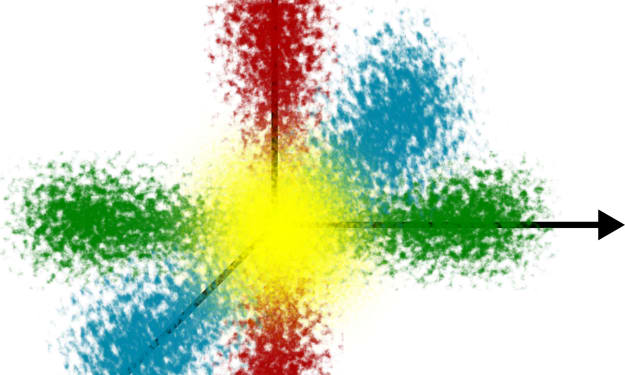
The Role of Electrons in Computers and Human Beings
A disclaimer first. I am no physicist, particle or otherwise. The only knowledge I have of the subject of subatomic particles like the electron comes from what I learned during my years at university and then graduate school, plus a healthy amount of leisure reading on quantum physics outside of my academic studies. My expertise is in the biological sciences, specifically micro and molecular biology, not physics. That said I believe I know enough to address this topic in at least some depth. I also would very much appreciate and welcome any corrections or additions by actual physicists with real expertise in the area.
By Everyday Junglist19 days ago in Futurism
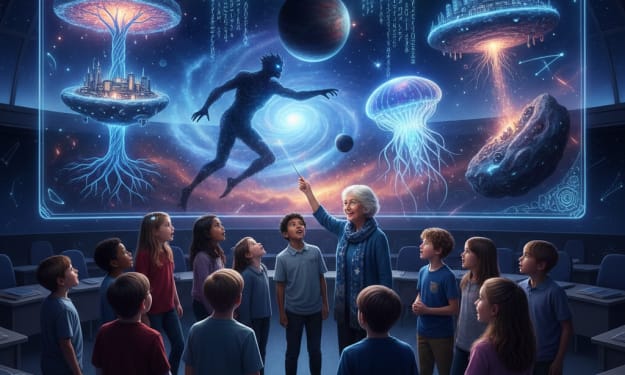
10 Mind-Blowing Space Stories School Never Told You
For many of us (especially if you grew up watching Star Trek), space truly feels like the final frontier. Sure, school taught us about planets, gravity, and maybe a little about rockets. But what we got was just a glimpse of the safe, simplified version.
By Areeba Umair29 days ago in Futurism
AI as a Reflective Surface
Much of the confusion surrounding artificial intelligence comes from treating it as an agent rather than a surface. When people speak about AI “doing the thinking,” “creating the ideas,” or “speaking for someone,” they are often projecting agency onto a system that does not possess intention, belief, or understanding. This projection obscures what is actually happening in many real-world uses. In those cases, AI is not acting as a source of meaning, but as a surface that reflects, redirects, and reshapes what is already present.
By Peter Thwing - Host of the FST Podcastabout a month ago in Futurism
Doomsday Diary
Phase II: An AI to do the work of creating perfect placement for all of the applicants. To be honest the technology sounded extremely far fetched to me, but it all became my new reality rather quickly. There was something interesting, or maybe a bit cliche when you come to think about it, about everyone who had applied for phase II: they had an extremely large amount of personal data compared to other phase applicants. As a self diagnosed typical phase two individual, I have no shame admitting that I used all my medias the same exact way as before having my privacy stripped. In case you’re brand spanking new, there was a day when the people of our nation gave up our privacy and agreed to be monitored and watched constantly. This lead several individuals to be outraged, as well as become very conscious of how they used there technology. But not I, I love the stimulation and entertainment of technology so much that I continued to use all my tech. in the exact same way as before. In other wrods I loved my phone, lap top, and tv so much that I could care less if anyone was monitoring or watching my activity. Because this, it seems the process for me was just about instant, which lets be honest, is exactly the way I like it. Now don’t forget, all these phases, and perfect placement, and pods, and bubbles, came as a the response to a very deadly, near apocalyptic virus.
By Elijah Davis2 months ago in Futurism
Exploring the Vast Universe of Perry Rhodan
I first stumbled upon Perry Rhodan on a rainy Saturday afternoon in a tiny secondhand bookstore in Berlin. I wasn’t looking for it—I was just hiding from the cold—but the neon orange spines on the shelf called to me like a secret. I picked up the first issue and found myself staring at a cover depicting gleaming spaceships, alien landscapes, and a man who somehow looked both heroic and terrified.
By John Smith2 months ago in Futurism
Nostradamus Predictions for 2026.
Nostradamus Predictions for 2026 Nostradamus remains one of the most enduring names in prophecy. Born Michel de Nostredame in sixteenth-century France, he worked as a physician, astrologer, and writer, a man who turned observation into prediction. His book Les Prophéties has travelled through centuries, its cryptic verses sparking argument and awe in equal measure. Some see his work as poetic philosophy, others as proof that the future leaves shadows long before it arrives. Whatever the truth, his name still rises whenever the world trembles.
By George’s Girl 2026 2 months ago in Futurism