
How Beginner Riders Can Safely Learn Their First Big Jump
The Right Jump, Gear, Approach and Guidance

Key Takeaways:
- Big jumps should come after solid basics.
- A safer first jump starts with controlled setup, predictable landing, and high-quality protective gear.
- Riders improve faster when they practice in small steps.
- Confidence matters, but calm repetition matters more. And safety, of course.
There comes a point in riding when rollers and little lips stop feeling like enough. A beginner starts eyeing that bigger jump down the line and thinking, maybe soon. That’s normal.
The first big jump is less about bravery than preparation. Riders who learn well usually aren’t the wildest ones in the group. They’re the ones who build good habits early.
Start With the Skills That Come Before the Jump
The jump itself gets all the attention, but most of the work happens earlier.
Before a rider starts practicing larger features, they should already feel steady with:
- A balanced attack position
- Light front-wheel lifts
- Pumping over rollers
- Controlled speed on approach
- Staying centered on takeoff and landing
If those pieces still feel shaky, don't get ahead of yourself – a bigger jump is risky and will expose those weak spots fast.
Why the Basics Matter So Much
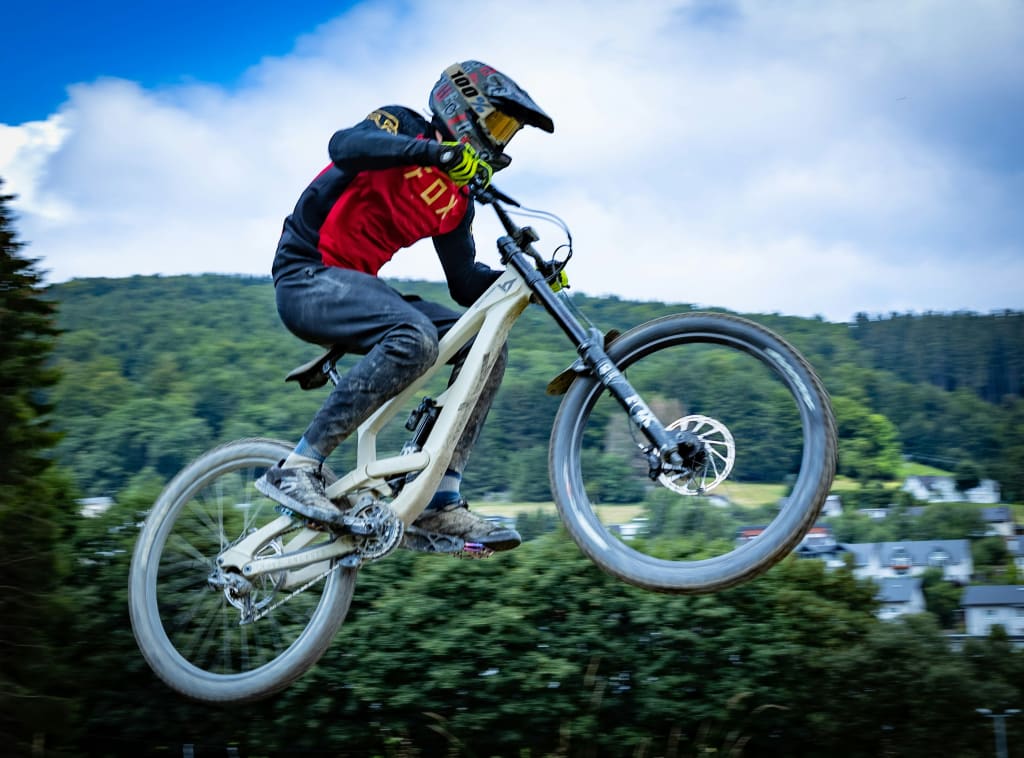
Jumping a bike isn’t as simple as people think: It's not about yanking upward or raw bravado. It’s about much more: carrying speed, staying composed, and letting the bike move underneath the rider without panic. Beginners often rush to “pull up” at the lip and get stiff in the air.
Pick the Right First Big Jump
Not every big jump is a good learning jump. Some punish small mistakes in a way that makes progression miserable.
The best first larger jump usually has a few things going for it:
- A clean, obvious takeoff
- A landing that matches the jump well
- Enough room to roll away without immediate technical pressure
- A surface that’s maintained and predictable
- A place where a rider can watch others hit it first
If you’re having trouble achieving points 2 through 4, purchasing a landing pad or stunt airbag may be a solution. Also, it’s worth noting that point 5 helps more than people admit. Seeing a jump ridden smoothly by someone else gives a beginner a read on speed, body position, and where the landing actually starts.
Build Up in Stages, Not Leaps
A first big jump should not be the first time someone deals with speed, airtime, and commitment all at once. The safer path is staged progression.
A practical progression model
Riders can work upward through something like this:
- Start on rollers and small tabletops to learn takeoff timing
- Move to slightly longer jumps with forgiving landings
- Practice matching speed to landing, not just clearing distance
- Repeat the same jump enough times that body position feels automatic
- Step up only when the previous feature feels controlled, not lucky
That last distinction matters. Clearing a jump once by instinct doesn’t mean it’s learned. Being able to do it five or six times without drama is a much better sign.
What Safe Jump Practice Actually Looks Like
A beginner rider getting ready for a bigger jump should think through three phases:
- Approach
- Takeoff, and
- Landing.
Just like an airplane or anything else flying through space, it’s crucial to master all three up and through each stunt progression.
On the Approach
The rider needs a speed that is consistent, deliberate, and definitely not second-guessed. Pedaling wildly at the last second usually ends badly, and braking into the lip can feel even worse.
At Takeoff
The goal is to stay centered and relaxed, with eyes ahead and arms and legs ready to absorb movement. A death grip on the bars is common the first few times, especially for a new gravity-defying stuff; the same is true with the rest of the body.
Naturally, our bodies want to tighten up with a spike in adrenaline, but the key here is to stay focused and loose. Developing habits to remain calm under this pressure is central to improving form, yet it’s often something we forget to include. It may not be as exciting as the jump itself, but mastering your nervous system as you would your muscles, form, and coordination can be what makes all the difference between a clean jump with solid form and an ugly crash.
On Landing
Land with the bike pointed in the direction it will roll next. A looser body can be more equipped to make rapid, non-panicked adjustments to make sure that you’re placing your whole body where you want to land on the trail or stunt pad.
You don’t want to land nose-high or dead flat if it can be avoided, and definitely not with all the rider’s weight dumped onto the rear wheel because fear took over in midair. The front wheel should land first, and if it doesn’t, you might need to readjust the amount of air you’re giving your bike.
Gear and Setup Still Matter
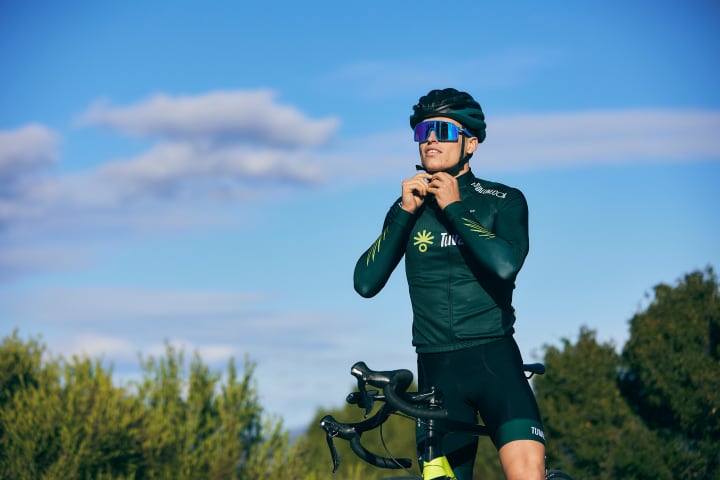
Skill comes first, but equipment and accessories affect the learning curve. A rider doesn’t need the fanciest build to practice jumps safely. They do need a bike in good working order, and a setup that makes sense for the terrain.
At minimum, it’s worth checking:
- Tire pressure
- Brake function
- Suspension setup, if the bike has it
- Pedal grip
- Helmet fit
Protective gear counts too. A proper helmet is the baseline. Many riders also feel more comfortable progressing with knee pads, elbow pads, and MTB gloves.
Common Mistakes That Trip-Up New Jump Riders
Beginners usually don’t fail because they lack guts. More often, they stack together small errors.
The usual culprits:
- Looking down at the lip instead of ahead
- Hitting the jump too fast after one timid attempt
- Hitting it too slow after watching a crash
- Pulling too hard with the arms
- Freezing in the air
- Trying a larger jump while tired
One more gets overlooked: riding under social pressure. If the only reason a rider is going for a feature is that friends are waiting and filming, that’s a rotten reason to learn anything technical.
Coaching, Spotters, and Smart Feedback
New riders improve faster when somebody trustworthy is watching. That could be a coach, an experienced riding friend, or a patient parent.
According to experts, useful feedback should be straightforward and actionable, such as:
- ”You came in too slow on the approach. Try pedaling harder at ___ spot.”
- ”You got stiff at the lip.”
- ”Your eyes dropped. Keep your aim steady.”
- ”That one looked smooth. Do it again.”
Having a good coach you can trust is essential for anyone learning to ride, no matter your experience level.
Know When to Call it a Day
Sometimes the smartest jump decision is no jump at all.
If a rider is fading, second-guessing every run, or starting to get sloppy on basic features, that session has probably given what it has to give. Walking away before the bad attempt is a skill too.
This is also important for inclement weather, and not just the days when you’re under the weather. Outdoor sports enthusiasts are known to push it to the maximum, but nature can be relentless. The outdoors is always waiting, but it will wait even longer if you have to recover after a preventable injury.
Progress Comes From Reps, Not Rush
The first big jump tends to loom large in a rider’s head. Once it happens, the story usually changes. It becomes less about one dramatic milestone and more about the process that made it possible: good habits, measured progression, and repetition.
That’s the part worth remembering. Riders don’t need to treat jump practice like a stunt show. A calmer approach often leads to cleaner airtime, better landings, and more confidence the next time wheels leave the ground.
About the Creator
Tess DiNapoli
Tess DiNapoli is an artist, freelance writer, and content strategist. She has a passion for yoga and often writes about health and wellness, but also enjoys covering the fashion industry and world of fitness.
Keep reading
More stories from Tess DiNapoli and writers in Wheel and other communities.
Why Family-Focused Dog Training Leads to Happier Homes (and Fewer Shelter Returns)
Chewed shoes, dinners turning into inadvertent games of fetch, and a doorbell that’s fallen into disuse for the incessant barking it elicits—if that describes your life as a pet owner, you’re not alone. Every year, thousands of dogs get returned to shelters for behavioral problems that are completely manageable and preventable.
By Tess DiNapoliabout 11 hours ago in Petlife
Why Putrajaya Remains One of the World’s Least Known Government Cities
When people think of Malaysia, the bustling skyline of Kuala Lumpur usually comes to mind. The famous Petronas Twin Towers dominate postcards and travel brochures, symbolizing the country’s modern progress. Yet, few outside Southeast Asia realize that Malaysia’s administrative heart is not Kuala Lumpur at all. Instead, the country’s government operates from a quieter, carefully designed city known as Putrajaya.
By Irshad Abbasi 4 days ago in Wheel
Road Trips and the Reality of Animal Collisions
Road trips — what can be a better way to enjoy a holiday? Get together with your family or friends, pack all your things in your SUV or a van, load up some music you like, and set off for a big adventure. Driving through highways, watching the scenery change with little towns and mountains flying by.
By Michal Grayen5 days ago in Wheel




Comments
There are no comments for this story
Be the first to respond and start the conversation.