
Some Simple Problems With The SAVE Act
The SAVE Act may create more problems than it's easy to solve.


One of the more problematic bills under debate in Congress is the Safeguard American Voting Eligibility Act, or the SAVE Act. The act would require that voters travel to a physical place to register and then present multiple documents (an identification card of some sort, proof of citizenship, and possibly proof of name change) to an official. While all of this looks pretty simple, there are plenty of issues with the bill that should make it of questionable import.
First Off: A Minor Debunking
Opponents of the bill point out that married women will be disenfranchised if the bill passes. That is, because women tend to take the last name of their husband, and the bill requires that the name on the birth certificate must match the name on the identification used, they would be disqualified from voting. However, all women would need to do is present their marriage license alongside their other documentation to remove this problem. For that matter, anyone who has legally changed their name would merely need to present their paperwork to avoid this issue.
Who Will Suffer the Most
There are three essential problems with the SAVE Act: Access to documentation, accessibility for voters, and human factor. It’s estimated that 9% of current voters do not have easy access to documentation that would prove their citizenship. This could range from simply not having it (recently lost in a fire or natural disaster, for example) to having it at a relative’s place (many college students leave their birth certificate with their parents, for example). Also, while most naturalized citizens have the appropriate paperwork, it’s subject to the same limitations as birth certificates (getting lost or destroyed or being left with someone else), and are harder to replace.
As these forms take time to replace, it’s estimated that this could effectively disenfranchise roughly 30 million otherwise eligible voters.
It would also effectively disenfranchise entire groups of voters. Elderly and disabled groups are the obvious victims, as they would have problems showing up in person. It’s been estimated that rural citizens would need to drive 260 miles round-trip to show their documents to a living person (as required), making it difficult at best. The poor would also be disadvantaged as they would need to take time off work as well as find a voting registrar that’s actually open to deal with the problem. College students would also need to deal with this before heading off to school, adding one more item to the checklist that may be forgotten about until it’s too late. The SAVE Act thus discourages those groups to register to vote.
[This ignores that the Trump Administration is attempting to do away with mail-in votes completely. If that happens, then all of these groups are effectively disenfranchised.]
There’s also the human factor. Some of the forms of documentation require training to make the person familiar with all of the forms that they may have to deal with. The SAVE Act also promises huge penalties for anyone who fails at their job and lets an illegal actually vote. This adds incentive for the person checking the documentation may judge against documentation he’s not sure about, even if it’s perfectly legitimate. Worse, it’s possible that racists, homophobes or those with an agenda may judge the documents with a higher bar than other groups. You just can’t add more chances for people to screw up without it happening at some point.
The Military and Citizens Abroad Problem
It’s possible that servicemembers will be disenfranchised by the SAVE Act. The problem is that soldiers stationed abroad will not be able to meet the requirement to show their documents in person once the bill is passed, resulting in them being struck from voter rolls. While it’s possible that the Uniformed And Overseas Citizens Absentee Voting Act (UOCAVA) will protect their right to vote, as well as regular citizens voting abroad, there is the problem that the SAVE Act may force changes in mail-in ballot systems that may make voting for these citizens difficult, if not impossible. These complications may effectively disenfranchise as many as four million citizens.
Does This Constitute a Poll Tax?
This is an interesting legal issue. Poll taxes were originally instituted to keep certain groups (especially blacks) from voting: In order to vote, the person would need to pay a certain amount of money. They made illegal in 1964 through the 24th Amendment. The SAVE Act would require someone to pay for an identification card and/or proof of citizenship (if it needed to be replaced, for example). However, courts have consistently ruled against indirect costs (such as for identification or replacement of paperwork) counting as a poll tax. Also, some states have programs so that the cost for identification is covered.
This Has Been Tried Before
In 2011, Kansas passed legislation requiring voters to show proof of citizenship. This ended up eliminating 31,000 otherwise eligible voters from the rolls, or about 12% of the state’s voter rolls. It was estimated that the law cost the state $350, 000, and that’s before the lawsuits: There were two lawsuits that challenged the law, costing Kansas another $1.9 million and resulted in the law being struck down as unconstitutional and against voting laws of the time. All of this was to prevent voting from illegal citizens, which state lawyers had problems proving was an actual problem (only 39 instances were found from 1993 to 2013 and were ruled possible administrative errors).
In short, the Kansas bill disenfranchised thousands of voters, cost hundreds of thousands to implement, and didn’t really do anything. Now imagine that at the federal level.
[Arizona has also passed a bill requiring proof of citizenship, but it was only partially struck down. Given that the SAVE Act will supersede the National Voting Registration Act (which allowed for the partial ruling), it’s likely the same tactic won’t work if the SAVE Act is passed.]
So….
The SAVE Act is coming off as a feel-good measure for conservatives. While most people agree that there needs to be some form of voting identification, no one has been able to show how it would work better than current systems. Not only does it create problems for mail-in voters, but there would also be the problem of the administrative costs to make it work. It’s also likely to ignite dozens of court cases if it’s put into law. Worst of all, it’s likely to effectively disenfranchise tens of millions of otherwise eligible voters in an attempt to eliminate dozens of undocumented aliens from voting illegally.
In short, there’s just no good reason to support the SAVE Act, and plenty of good reasons to reject it.
About the Creator
Jamais Jochim
I'm the guy who knows every last fact about Spider-man and if I don't I'll track it down. I love bad movies, enjoy table-top gaming, and probably would drive you crazy if you weren't ready for it.
Keep reading
More stories from Jamais Jochim and writers in Journal and other communities.
Do YouTubers Help Teach Self-Defense?
YouTube offers a lot of great how-tos on pretty much every topic, but you need to wade through a lot of garbage to get there. This definitely applies to learning self-defense; there are too many would-be gurus promising too much. Obviously, if you can afford lessons in a dojo or an afternoon class, go for it: It’s always better to learn with other people than it is alone, especially as you get more in-depth education, and having a resisting opponent is always better than just punching at shadows. However, some people don’t have access to a decent dojo or can’t afford one, so YouTube is their only option. Do whatever you feel necessary for your own defense, no matter what it takes.
By Jamais Jochim3 months ago in Journal
Author’s Advice
If you would’ve asked me 20 years ago did I know I’d become a writer and an author, I would’ve said “nope, ain’t happening”. As fate would have it I did become an author and I can honestly say I’m loving it so far. It really does feel good to be a writer. I’ve learned a lot on this journey and I feel like with even me being as new to this world as I am, there’s some wisdom I need to share with every other aspiring author.
By Joe Patterson26 days ago in Journal
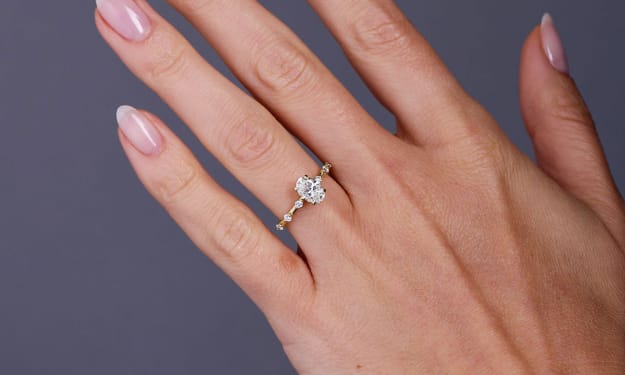
The Ethical Sparkle: Why My Next Diamond Will Be Grown, Not Mined
For generations, the word "diamond" was synonymous with deep-earth mining, ancient geological pressure, and, unfortunately, a complex web of ethical concerns. We were told that for a stone to be "real," it had to be pulled from the crust of the earth after millions of years. But as we move through 2026, the narrative of luxury is undergoing a radical transformation. The modern British shopper is no longer just looking at the "Four Cs" (Cut, Colour, Clarity, and Carat); they are looking for a fifth: Conscience. This shift has placed lab-grown diamonds at the very forefront of the fine jewellery revolution.
By Mohd Kaish6 days ago in Journal



Comments
There are no comments for this story
Be the first to respond and start the conversation.