
Who Lived Through the Ash and Fire?
Uncovering the stories of escape, resilience, and life beyond one of history’s most devastating volcanic disasters

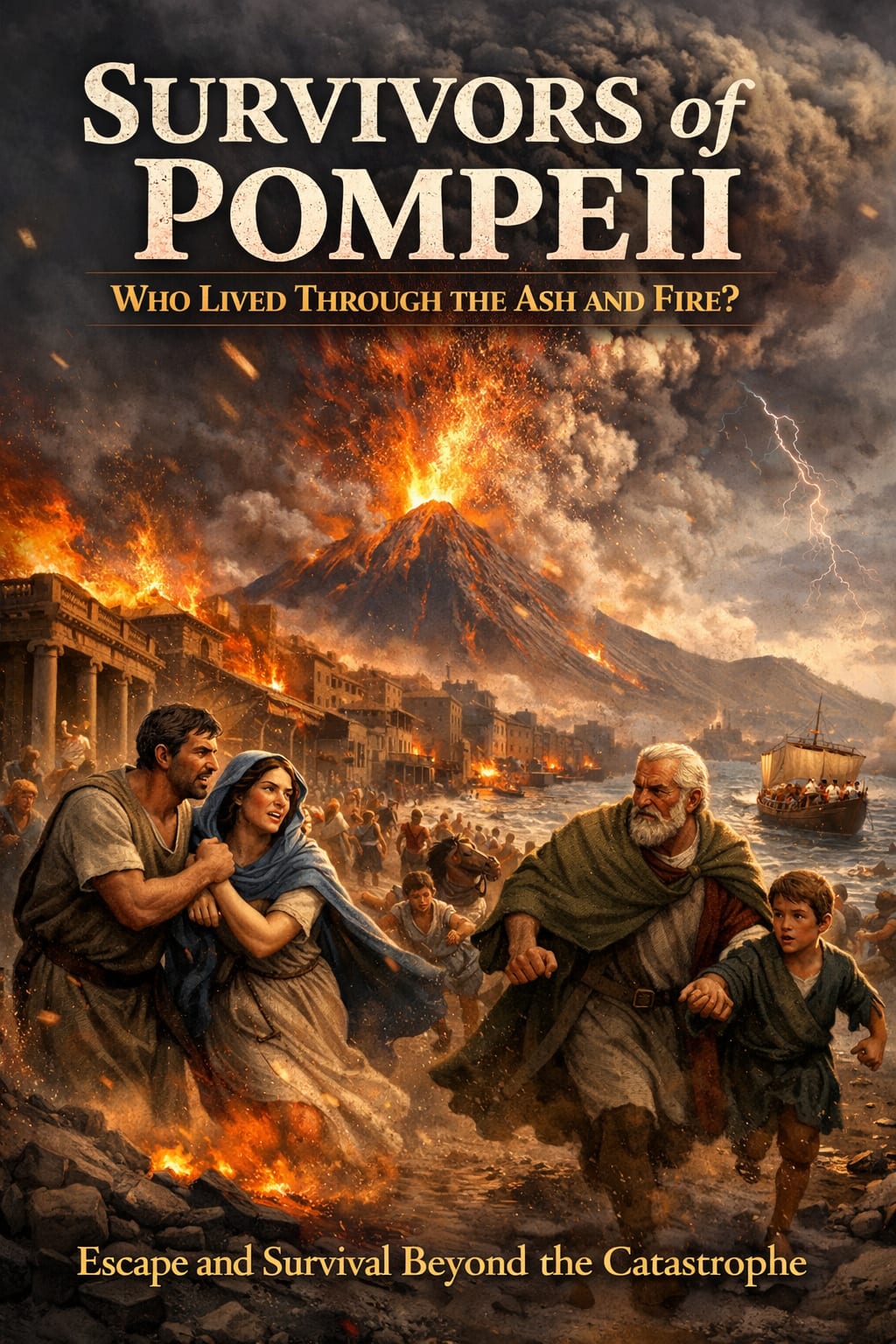
When the Roman city of Pompeii was buried under volcanic ash and pumice in 79 AD, it seemed as though the entire population had perished. The catastrophic eruption of Mount Vesuvius unleashed a deadly combination of ash clouds, toxic gases, and pyroclastic surges that froze the city in time. Today, Pompeii is often remembered as a place where life abruptly ended—but the truth is more complex. Not everyone died. Some people did survive.
Historians estimate that Pompeii had a population of around 10,000 to 20,000 people at the time of the eruption. However, only about 1,000 to 1,500 bodies have been discovered in the ruins. This significant discrepancy suggests that many residents managed to escape before the worst of the disaster struck. Archaeological evidence and ancient writings both support this conclusion, offering glimpses into the experiences of those who lived through the tragedy.
One of the most important historical sources on the eruption comes from Pliny the Younger, a Roman writer who witnessed the disaster from across the Bay of Naples. In letters addressed to the historian Tacitus, Pliny described the chaos, fear, and desperate attempts to flee. He noted that many people left their homes early, carrying belongings and loved ones, while others hesitated and were later trapped.
The timing of the eruption played a crucial role in survival. The initial phase involved a rain of pumice stones and ash that lasted for several hours. While dangerous, this stage gave many residents time to escape, especially those who acted quickly. Roads leading out of Pompeii became crowded with people fleeing on foot, by cart, or toward the sea. Some likely found refuge in nearby towns or countryside villas.
However, those who delayed or underestimated the danger faced a far deadlier threat later: pyroclastic flows—fast-moving currents of hot gas and volcanic material. These surges could reach temperatures of over 500°C (932°F) and travel at incredible speeds, instantly killing anyone in their path. It was these flows that caused most of the deaths preserved in Pompeii’s ruins.
Archaeological findings reveal signs of hurried departures. In some homes, valuables were left behind, suggesting that residents fled in panic rather than planning. In other cases, skeletons found near the city gates indicate that some people almost made it out but were overtaken at the last moment. Yet the absence of bodies in many areas strongly supports the idea that a large portion of the population escaped in time.
Evidence of survivors also comes from inscriptions and records found outside Pompeii. Some names that appear in the city’s ruins later show up in nearby regions, indicating that former residents rebuilt their lives elsewhere. These individuals carried with them memories of the disaster and likely shared their stories, though most have been lost to history.
Nearby towns like Herculaneum were also affected, though in different ways. Herculaneum was hit earlier and more directly by pyroclastic flows, leaving fewer opportunities for escape. Even so, recent discoveries suggest that some residents there may have survived by fleeing early or seeking shelter in ways that protected them temporarily.
The story of Pompeii’s survivors is ultimately one of human instinct and decision-making under pressure. Those who recognized the danger and acted quickly had a chance to live. Others, perhaps bound by fear, disbelief, or hope that the eruption would subside, stayed behind and paid the ultimate price.
Today, Pompeii stands as both a graveyard and a testament to resilience. While the preserved bodies and ruins offer a haunting snapshot of those who perished, they also remind us of those who escaped—people who ran through falling ash, navigated chaos, and chose survival in the face of unimaginable danger.
So, did anyone survive Pompeii? Yes—many likely did. Their stories may not be as visible as the plaster casts of victims, but they are just as important. They represent the lives that continued, the families that endured, and the enduring human will to survive even the most catastrophic events.
About the Creator
Irshad Abbasi
Ali ibn Abi Talib (RA) said 📚
“Knowledge is better than wealth, because knowledge protects you, while you have to protect wealth.
Keep reading
More stories from Irshad Abbasi and writers in History and other communities.
Inside the Hunt for the Other Humans
The first sign that something was wrong wasn’t the silence—it was the absence of interruption. No distant engines, no chatter bleeding through thin walls, no sudden bursts of laughter from unseen neighbors. Just a stillness so complete it felt intentional, as if the world had paused mid-breath and forgotten how to continue.
By Irshad Abbasi 2 days ago in History
Royal nanny to Prince William and Kate's children honored with special medal
In a moment that quietly highlighted the people working behind the scenes of royal life, Maria Teresa Turrion Borrallo—the longtime nanny to the children of Prince William and Catherine Middleton—was honored with the prestigious Silver Royal Victorian Medal. The award was presented on March 24 during a formal investiture ceremony in Windsor, with Prince William himself leading the recognition.
By Shirley Oyiadom3 days ago in History
Fears of the end of the world are sparked by the closure of Jesus' crucifixion site during Holy Week.
Biblical predictions about the Antichrist may be coming to pass, according to headlines following the Church of the Holy Sepulchre's extraordinary closure during Holy Week! Although it sounds a little alarmist, the claim is supported by evidence.
By Francis Dami5 days ago in History


Comments
There are no comments for this story
Be the first to respond and start the conversation.