
The Naval Race Between Germany and Great Britain: 1906-1914
Remembering the Naval Arms Before World War I
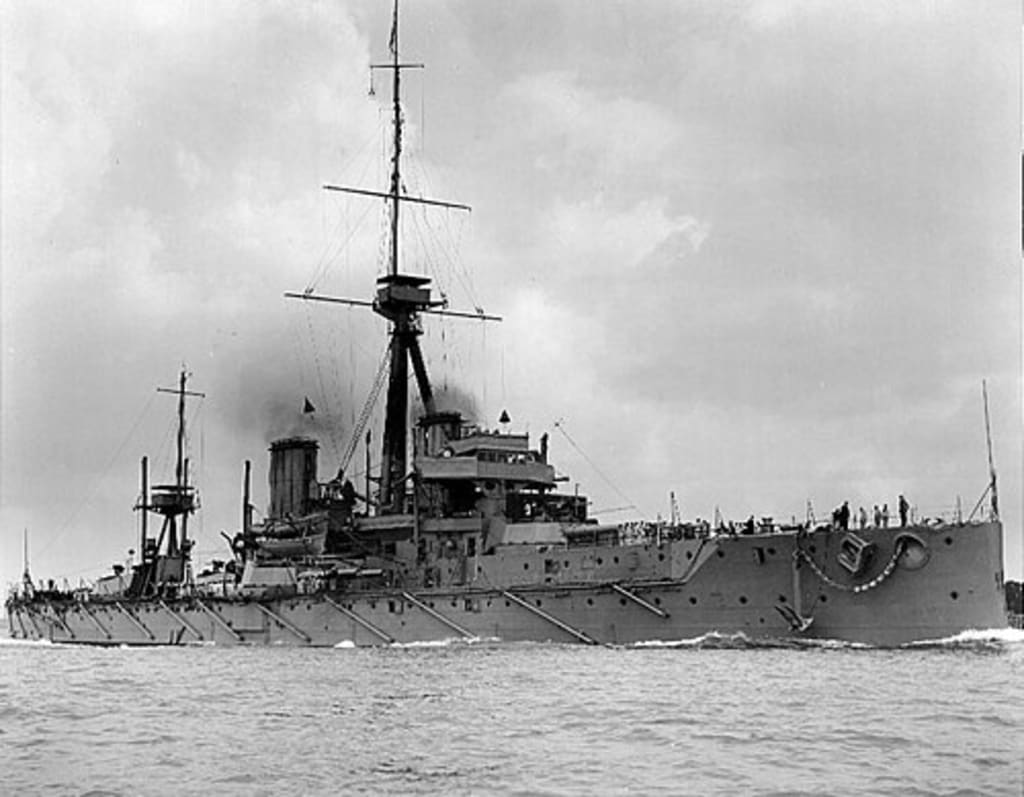
The Anglo-German naval race was one that did not necessarily begin in 1906. In fact, years before, the Germans had already begun to expand the Imperial German Navy. In the late 19th century, the German Naval League was established. In the 20th century, there was little sign that the Germans would abandon their naval expansion program. The British were prepared to expand the Royal Navy to ensure that it clearly remained the largest in the world.
After all, the Royal Navy was Britain’s first line of defense. Just as it had been in the Napoleonic Wars during the Battle of Trafalgar, it remained as such in the 20th century. Britain could not be invaded so long as the Royal Navy was dominant at sea.
By 1906, Britain had finished the construction of a new class of battleship. This new class of battleship was the dreadnought class, which revolutionized battleships and made pre-dreadnoughts obsolete. The HMS Dreadnought was the first dreadnought battleship in the world, and its completion would provide a further spark for the Anglo-German naval race.
To match the Royal Navy, the Germans also began to construct dreadnoughts for the Imperial German Navy. The Germans would begin to construct their own class of dreadnought battleships in 1907. By 1909, the first Nassau class of German dreadnoughts was commissioned, and the gulf between the Royal Navy and Imperial German Navy had now receded.
The Germans would continue with their naval expansion hereafter. In 1909, another Heligoland-class of battleships was also laid down. They would be commissioned a few years later in 1911 and 1912. As such, the Imperial German Navy was clearly expanding and gradually reducing the numerical superiority of the Royal Navy.
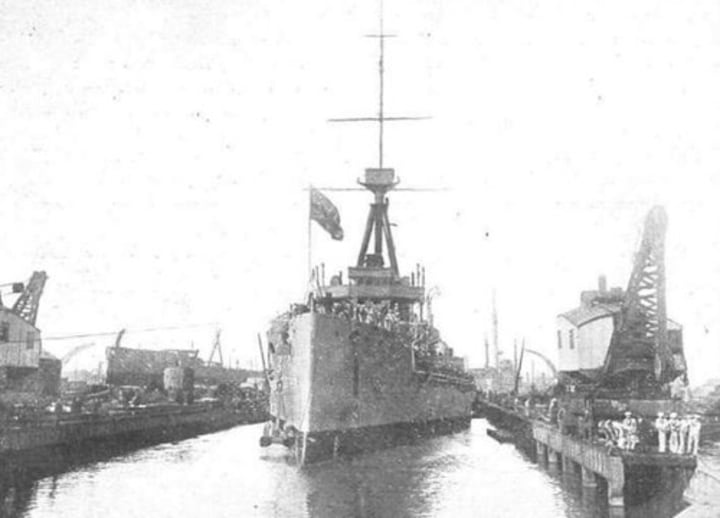
However, by this time, the Royal Navy had developed a new superclass of dreadnought battleships. The first of these super dreadnoughts was the Orion-class battleship, which was commissioned in 1912. The Orion-class eclipsed the previous dreadnoughts, first developed by the Royal Navy in 1906.
Despite this, the naval race continued. By 1912, war in Europe was increasingly more likely, and so neither side was about to reduce naval expansion programs. As such, the German Naval Law of 1912 proposed an even larger number of German battleships that would begin to outnumber the British in their home waters. Combined with the German allies Austria-Hungary, who were also constructing dreadnoughts, the Royal Navy could no longer guarantee Britain’s position in the Mediterranean. However, an alliance with the French provided the naval support that Britain required in the Mediterranean.
By 1914, war in Europe emerged after the assassination of Archduke Ferdinand. This assassination ensured war in the Balkans, while both Russia and Germany began to provide military support for their allies there. The implications of this in Western Europe became clear when Germany declared war on Russia’s Entente ally, France, and the British Empire joined France when German troops passed through Belgium.
In the war that followed, there were relatively few naval battles between the IGN and the Royal Navy. After their defeat at the Battle of Heligoland Bight, the Germans kept their fleet in port.
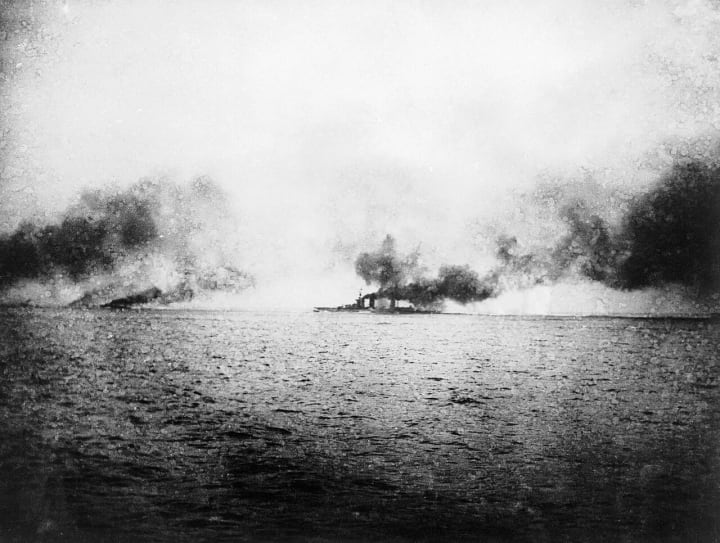
This only changed in 1916 when Germany's Admiral Scheer drafted a more ambitious plan to eliminate the British Grand Fleet, and so the Battle of Jutland began in 1916, which involved most of the IG. This battle included the dreadnoughts and super-dreadnoughts of the British and German navies, and it was, in fact, the Imperial German Navy that had the better of the battle as Britain lost more ships. However, the Germans still withdrew from the battle after taking losses of their own. The Royal Navy’s German economic blockade continued during the war, and generally, the Entente had naval superiority in this war.
After the war, the Treaty of Versailles highlighted that much of the Imperial German Navy had to be scrapped. Just a few thousand tons of German naval ships remained in the postwar era, and the Anglo-German naval race was therefore discontinued. The Royal Navy remained the largest in the world, although the United States Navy was catching up.
About the Creator
Keep reading
More stories from writers in History and other communities.
Mummified Monkey Found at Minnesota Department Store
Shoppers expect to find clothing, household goods, seasonal decorations, and maybe the occasional odd collectible at a department store. What they do not expect to find is a mummified monkey. Yet that is exactly the kind of bizarre discovery that has captured attention in Minnesota, where reports say a preserved monkey was found inside a department store, leaving employees, customers, and local authorities both puzzled and fascinated.
By Irshad Abbasi 2 days ago in History
History of The Three Stooges (Part I: The Beginnings and Columbia Pictures - 1920s-1936)
I have been itching to write about The Three Stooges on Vocal for close to two years, but I couldn't figure out how to do it. I wanted to do it by third Stooge, but that's a bit complicated. I know this much. I was about eight or nine years old when I first saw The Three Stooges. I remember one of my local channels had the Stooges on for hours, and I tried my damnedest to be up for those shorts. I remember that the Family Channel actually had an hour of the Stooges on from 11PM to midnight, and it was the entire library on during that time.
By Clyde E. Dawkins4 days ago in Geeks




Comments
There are no comments for this story
Be the first to respond and start the conversation.