

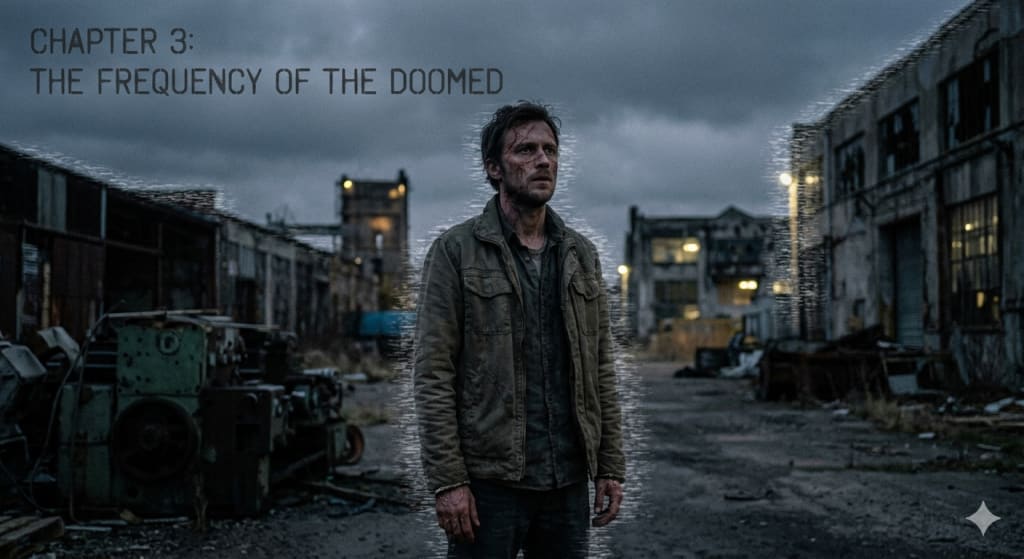
The loss of my career, my name, and my penthouse was a sequence of external tragedies, a series of demolitions I could at least understand through the lens of cause and effect. But they were nothing compared to the loss of my silence.
Silence, I realized too late, is the ultimate structural luxury. In my former life, I had spent millions on sound-dampening insulation and triple-glazed acoustic glass to ensure that the world remained a muted, obedient background to my thoughts. Now, that sanctuary was gone. The lightning strike hadn't just scarred my skin; it had remapped my brain. My synapses were no longer firing in the typical, standard patterns of a high-functioning architect. I had become a biological radio, tuned to a frequency I doubted any human was ever meant to hear.
I don’t see the world in blueprints anymore. The clean, mathematical vectors that once allowed me to look at a building and see its skeletal stress points have been overwritten. Now, I see the world in The Static.
It began as a persistent, low-grade hum in the back of my skull, a sound like a refrigerator motor failing in a distant room. But within weeks, it migrated to my eyes. It is a visual shudder, a flickering grain that clings to the edges of reality like television snow on a dead channel. It doesn't obscure the world completely; it vibrates over it, a translucent layer of gray noise that makes the most solid structures appear to be breathing—or rotting.
At first, I thought I was losing my mind. I sought help in the early days, before the money ran dry, but the neurologists only spoke in terms of "post-traumatic sensory processing disorder" and "atypical tinnitus." They gave me pills that turned my blood to lead but did nothing to quiet the hum. They looked at my Lichtenberg scars and saw a miracle of survival. I looked at them and saw the Static pooling in the corners of their eyes like oil on water.
When the last of the legal fees were paid and the final eviction notice was taped to my glass door, I retreated to the only place that matched the frequency of my broken soul: the District of Rust.
It is a place where the buildings are too tired to stand and the people are too broken to leave. Located in the shadow of the city’s gleaming core, the District is a sprawling graveyard of industrial ambition. Here, the "Architecture of the New Century" is a cruel joke. The warehouses have sunken chests, their brickwork pockmarked by decades of acid rain and neglect. The streets are paved with the shattered glass of dreams that never quite solidified.
I took a basement apartment on a street where the streetlights had long ago given up their ghosts. It was a concrete box that smelled of damp earth and stale grease, located beneath a laundromat that leaked soapy, gray water through the ceiling. My neighbors were shadows—men and women who moved with a shuffling, rhythmic gait, as if they too were tuned to a frequency of despair.
I tried to drown the Static. In my previous life, I had used "fancier ethanol"—single-malt scotches aged in charred oak, sipped from crystal tumblers while I watched the sunset. Now, I settled for cheap gin that tasted like pine needles and battery acid, purchased from a liquor store with bulletproof glass and a clerk who never asked for my name.
The alcohol was a failed experiment. It didn't silence the hum; it only turned the gray snow into a blinding blizzard. When I was drunk, the Static became aggressive. It would coalesce into shapes, phantom geometries that pulsed in time with my failing heartbeat. I would sit in the dark, clutching a plastic cup, watching the Static crawl up the peeling wallpaper like a swarm of translucent insects.
I became a ghost in my own city.
To the public, I remained a cautionary tale of hubris—the man who built a bridge to God and was struck down for his arrogance. My face, once a symbol of prestige, was now the "Before" picture in articles about professional ethics and engineering failures. I was a meme of failure, a ghost story told to architecture students to keep them humble.
To the police, I was something more mundane: a "vagrant with a history of delusions." I didn't stay in my basement. I couldn't. The Static was louder when I was stationary, so I walked. I prowled the city like a man looking for a lost key, my cane clicking against the pavement in a desperate attempt to find a rhythm that didn't vibrate.
But the most horrifying aspect of my new reality wasn't the Static itself; it was what the Static did.
It began to predict.
I would stand on a street corner, watch the visual shudder of the world, then the grain would suddenly sharpen. The gray snow gathered around a specific point—a fire hydrant, a balcony railing, a bus stop—and it would turn a bruised, metallic violet. I would feel a pressure in my sinuses, a sudden spike in the hum that made my teeth ache.
The first time it happened, I stood outside a bakery in the District. The Static screamed around a rusted delivery truck parked on a steep incline. I saw the air around the rear tires begin to "leak"—not air, but a thick, vibrating shadow of potential energy.
"The brake," I rasped to the driver as he stepped out. "It’s going to go. The tension is failing."
He looked at me with a mixture of pity and disgust, noting my scarred face and my gin-soaked breath. "Get lost, pops," he’d said, slamming the door.
I watched him walk away. Three minutes later, the bolt snapped—the same gunshot sound I had heard on the Blackwood Bridge. The truck rolled, crushing a fruit stand and pinning a cyclist against a brick wall.
I was there before the sirens. I was always there.
I became a regular feature at accident scenes, a hooded figure with a cane who arrived before the yellow tape. I would stand in the flickering snow of my vision, watching the Static bleed out of the twisted metal and the broken bodies. The police began to recognize me. Detective Miller, a man with eyes like flat stones, had already started taking notes. They thought I was a "ghoul," a man who haunted tragedies because I had caused the greatest one in the city's history.
They didn't understand that I wasn't looking for death. I was looking for the source.
The Static isn't just noise; it’s a language. It’s the sound of the universe's structural integrity failing, one micro-fracture at a time. I don't see the world in blueprints anymore because the world isn't a blueprint. It’s a temporary arrangement of matter held together by a fading signal.
I live in the District of Rust because the signal is weakest. Here, the decay is honest. But in the basement, even with gin, the hum gets louder. It’s no longer a vibration of "things." It’s starting to vibrate around "people."
I used to build altars to human ego. Now, I am a receiver for human doom. And as the blizzard of gray snow thickens behind my eyes, I realize that the Blackwood Bridge wasn't an ending. It was a tuning. I am finally beginning to hear what the city is actually screaming. I decided to pay a visit back to my former employer to do some research.
The glass doors of the Apex Structural lobby didn't recognize me.
I stood in the shadows of the plaza, leaning heavily on my cane, watching the infrared sensors sweep the pavement. In my former life, these doors would have sensed my gait from fifty yards away, sliding open with a soft, pneumatic sigh of reverence. Now, I was just a silhouette in a cheap coat, a thermal anomaly to be filtered out by the security subroutines.
I didn't try the front. Instead, I moved toward the service alley—a place I had designed for the invisible people: the couriers, the trash haulers, the nocturnal cleaners.
My right hand fumbled with the keypad hidden behind a loose limestone panel. I had installed this manual override during the construction of the Vane Tower as a personal safeguard, a "backdoor" into my own creation. I held my breath, the Static in my vision flickering like a dying fluorescent bulb. If Marcus had updated the firmware, I was finished.
Click.
The door groaned open. I slipped inside, the air immediately changed from the soot-heavy dampness of the street to the filtered, climate-controlled silence of the elite.
I didn't head for the elevators. My office—the mahogany-and-glass throne room on the 60th floor—belonged to Marcus now. He would be sitting in my chair, drinking the vintage Scotch I’d left in the sideboard. No, I was going down.
Three levels below the lobby lay the Archive. In the digital age, most firms kept their records secure on a cloud, but I had always been a man of the physical. I insisted on keeping the original vellums and blueprints of every project the firm had handled since the 1920s. I called it the "Dead Letter Office."
The basement was a cathedral of dust and silence. Thousands of architectural tubes were stacked in floor-to-ceiling honeycombs. The Static here was strange—not the violent, metallic violet of an impending collapse, but a thick, syrupy gray. It felt like walking through a room filled with ghosts who were all trying to whisper at once.
I moved to the back, toward the restricted historical annex. My cane tapped against the concrete, a rhythmic counterpoint to the hum of the HVAC system. I was looking for a specific designation: SERIES 1920-1929: THE GREAT RECONSTRUCTION.
I pulled a roll of vellum from a copper-sleeved tube. It crackled with the protest of a century. As I spread it across the drafting table, the Static suddenly surged, swirling into a tight, frantic spiral over the paper.
It was the blueprint for the Saint Jude’s Tenement Project – 1924.
To a normal architect, it looked like a standard housing block. But to a man whose brain had been rewired by a lightning strike on the Blackwood Bridge, the lines were screaming. The load-bearing columns weren't positioned for maximum efficiency; they were aligned in a series of "Harmonic Nodes."
I traced the ink with a shaking finger. The geometry was predatory. The building hadn't been designed to stand for centuries; it had been designed to act as a funnel. If a fire started in the kitchen, the very shape of the stairwells would act as a bellows, feeding the flames, while the structural supports would vibrate at a frequency that ensured a total, catastrophic pancake collapse.
The Saint Jude’s Fire of 1926 hadn't been an accident. It had been a "Tuned Event."
"The Scythe," I whispered. My voice sounded small in the vastness of the basement.
I realized then that there was an old predator at work in this city. It didn't just wait for tragedy; it built the stages upon which tragedy was required to perform. And I had spent twenty years unknowingly refining its blueprints.
I wasn't an innovator. I was a weapon-smith.
I heard a heavy thud from the floor above—the sound of the night security guard beginning his rounds. I didn't panic. I rolled the vellum tight, tucked it under my arm, and began my retreat into the dark. I had come for answers, but I had left with a debt.
The city wasn't just falling apart. It was being harvested. And for the first time since the bridge snapped, the Static in my head felt like a weapon of my own.
About the Creator
Nathan McAllister
I create content in the written form and musically as well. I like topics ranging from philosophy, music, cooking and travel. I hope to incorporate some of my music compositions into my writing compositions in this venue.
Cheers,
Nathan
Keep reading
More stories from Nathan McAllister and writers in Futurism and other communities.
The Social Execution
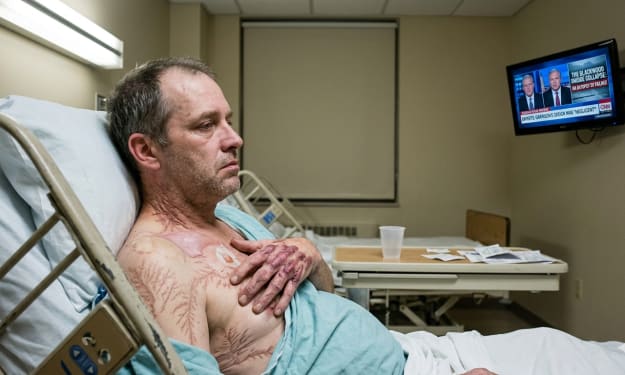
I woke up six months later in a sterile room that smelled of bleach and lost hope. Consciousness didn't return all at once; it arrived in agonizing increments, a slow-motion reconstruction of a man who had been shattered into a million jagged pieces. For weeks, the world was nothing but the rhythmic hiss of a ventilator and the fluorescent hum of a ceiling I hadn't designed. When I finally found the strength to open my eyes, I didn't recognize the landscape of my own body.
By Nathan McAllistera day ago in Futurism
The Future of Spatial Computing: Trends and Insights in 2026
Spatial computing has quietly evolved from a niche concept into one of the most transformative technological forces of the decade. Once associated primarily with bulky headsets and experimental prototypes, the field now encompasses a broad spectrum of technologies — from augmented reality glasses to mixed reality platforms that blend digital content seamlessly with the physical world. As we move deeper into 2026, spatial computing stands at an inflection point, poised to redefine how we work, learn, communicate, and interact with information. Understanding where this technology is headed requires examining the forces currently shaping its trajectory.
By Chaturbateme3 days ago in Futurism
Australia Accounting Services Market: Regulatory Compliance Demand, Advisory Services & Automation
According to IMARC Group, the Australia accounting services market reached a value of USD 12.2 Billion in 2025 and is projected to reach USD 21.3 Billion by 2034, growing at a compound annual growth rate (CAGR) of 6.24% during 2026–2034. The market is expanding as businesses increasingly seek professional accounting expertise to manage regulatory compliance, financial reporting and strategic financial planning. Australia’s evolving regulatory landscape, combined with rising transparency requirements and tax compliance obligations, is encouraging organizations to rely on specialized accounting firms. At the same time, startups, multinational corporations and small businesses are demanding advisory services that go beyond traditional bookkeeping and auditing. Technological advancements in automated accounting software, cloud-based financial platforms and advanced data security solutions are further transforming the industry. As financial management becomes more complex and technology-driven, accounting services are evolving into strategic partners supporting long-term business growth and financial decision-making.
By Kevin Cooper7 days ago in Futurism


Comments
There are no comments for this story
Be the first to respond and start the conversation.