
The Boston-Davos Five
Carnage in Lake Opinicon and the Great Pivot Point
The Boston-Davos Five (that's what the five of us call our little mini, unfunded, informal think tank) started meeting once a year after Davos. You know, the international conference on the environment. We were there three years ago, all of us grad students then, and we promised we would work together to make a difference. We aren't idealists, at least not completely. Pete's the most pragmatic, and also the quietest, V-necked sweater, glasses as thick as Coke bottles. He's a biology postdoc at MI-fricking-T.
Honey's the well-heeled looker, dresses like she almost doesn't care what anyone thinks, but her jewellry contradicts that. She has a Harvard law degree, lives with her family in the expensive part of Swampscott, and works for a Boston firm. She has what lawyers call a "Harvard mouth." Look out!
I wouldn't stand a chance with Honey, for obvious reasons--I come from regular people and my degree is in English lit. I wear elbow patches on my Tweed jacket.
Then there's Josh, a Sloane MBA grad, designer jeans, jacket, and skinny tie, manages five different startups.
And Sally, Kennedy Gov School grad, big brain, big conscience, no idea how to dress. I fantasize about her. Who wouldn't?
Every year we meet on the Ides of March. Why? My idea, "Beware," of course. We all know the environment's going south, literally, figuratively. We all know there is a tipping point and after that things will get really hard, if not impossible, to reverse. It's abundantly clear what measures are necessary, but none of us singly or together has figured out how to convince people to take them, or why they should pay for them. And time is running out.
We sat around a table in the Wusong Tiki Bar in Harvard Square, as good a place as any for our confabs. Actually better than just about anywhere. Chinese cuisine and a Boston bar are a killer combination. The vegetarian dumplings are the best in Cambridge Mass. Ask anyone, well, anyone with a palate. I looked around the table at our faces, Sally's face last. We all looked grim. How could we not?
We started by ordering five Bostons. Wusong does them right. The gin has to be dry, the grenadine sweet, the apricot brandy just a little bit tart, and Sicilian lemon--nothing else will do.
Josh spoke first. "Our site, blog, and newsletter are a bust. Traffic up only ten percent year over year. 700 subscribers, little hope of more. Most self-identify as climate geeks. We surveyed some of them. They all like our name, CLIMATE-SOS, and they read everything. But we're dying a slow death."
"But what about the vlog we did on the Greenland ice melting?" Honey chimed in. "Didn't they like that one?"
"They all liked you," Josh agreed, "but it didn't net us more traffic. So we're stuck under a thousand. And the views aren't much better."
"So maybe we just need a new platform," Honey persisted. "Maybe we should post on Talk-Tick."
"That's not likely to make a difference," Josh answered. "People aren't visiting our site. And Talk-Tick means short videos, max two minutes. You can't explain the environment in two minutes."
"Would a new name help?" Sally asked. "Maybe instead of CLIMATE-SOS something sexier." I wished she hadn't said sexier. Now it would be harder for me to concentrate on the subject.
"Like what?" Honey challenged, correctly sensing competition.
"I dunno, maybe 'DO-IT-NOW!" Sally suggested. And all of my attention went to my fantasy. I took a swig of my Boston to try to get my mind back to climate change.
Pete spoke quietly. "We've all seen the news. The temperature's rising even faster than predicted. We've got trouble on multiple fronts. Coral reefs, Ice sheets yes, and therefore salinity in the North Atlantic Drift, and if that fails, it's pretty much game over for about a third of the world. That's to say nothing of all the coastal cities that will be flooded. Most of the population lives on the coast."
The group turned to me. I took another drink and deliberately avoided looking at Sally. "Josh, I think from a business point of view you may agree that this a problem of Global Change Management."
"Yes," he said, interested. "Global Change Management WITHOUT a manager."
"Exactly," Sally said, "so instead of finding new forms of energy we're reverting to the old ones. No incentives for electric cars."
"Coal exported by Australia," Pete added.
"Coal being burned again right here in the U.S.A.,"Honey noted drily."
"In other words, we're going backwards," Pete summarized. We all took a moment.
"Okay," I continued. "The world has a political problem so we have a political problem."
"Well that's obvious," Honey scoffed. Her family was proud of its liberal leanings.
"Hear me out," I said. "Josh, you've surveyed our subscribers. How many say they are environmentally friendly liberals?"
"All of them," Josh answered. "All of them, to a man, woman, and teen."
"So hypothetically," I went on, "with excellent traction and a lot of luck, what percentage of this liberal audience may we hope to reach, all things working in our favor?"
"Sixty percent," he estimated, maybe two thirds. I can't imagine it would ever be more than that. Actually that's probably over-optimistic."
"And what percentage of climate-change deniers?" I pressed.
"You know the answer to that," Josh replied. "Zero!"
"I put it to you," I finished my point, "that unless we get penetration and conversion with climate-change deniers and conservatives, that nothing will change."
That was true, but it was a downer, a bigger buzz kill than I intended. The table fell silent. Mercifully, the waiter brought our dumplings, six each as usual, and we all reached for or chopsticks, which were washed, of course, nothing disposable at our table. We started to look at the menus to avoid the point I had raised. No one wanted to contemplate the harsh reality.
Honey pretended to study the menu in detail, an unconvincing ploy in that we all knew our favorite items by heart. She fell into her faux-debutante speaking tone, "The environment is taking its toll on sea food. We used to have a great variety at every restaurant in the Square, but not now. It's been ages since I tasted abalone."
Sally noticed Pete staring fixedly at nothing in particular. "Pete what's wrong?" she asked.
"He's thinking," Josh said, with no particular emphasis.
"I'm trying to remember," Pete whispered.
"He has a photographic memory," Sally noted.
"It's not a photographic memory, it's an eidetic memory," Honey contradicted, still competing.
Josh asked for quiet. "Ladies, no memory-envy please. Let the guy think."
At length, Pete spoke his mind. "So we have a political problem in that we need traction with conservatives and climate-change deniers?" I nodded. "I'm remembering something about the abalone in Moro Bay," he reflected
"That used to be a good spot to catch them," Honey chimed in. An affluent diner yes, and she knows where her luxury seafood comes from.
"My great uncle was a cattle rancher in Southern California," Pete continued.
"Did he care about the environment?" Sally asked.
"In his own way, yes, but actually most people would have called him an anti-environmentalist. He thought that all the pro-environment measures were impractical, and often made things worse."
"So how could we convince someone like that to take the environment seriously?" Josh asked.
"Exactly. That's the problem," I agreed.
"Well, he didn't doubt the importance of what we would call ecology," Pete went on. "He just thought that environmentalists made things worse."
"How?" Honey and Josh asked at the same time.
Pete thought for a moment. "By picking one thing, and politicizing that to the detriment of everything else."
"Actually, he had a point," Josh added. "Sometimes environmentalists made a change that affected the whole ecosystem in a negative way."
"Good ecology is all about a natural balance," Pete noted.
"That's the reason we need apex predators," Honey pointed out. "Without wolves in Yellowstone, the whole park went to hell. They re-introduced the wolves and the balance came back." We all nodded. That had been proven beyond any doubt.
"California went on a 'save the otter kick.'" Pete explained.
"And?" Josh asked impatiently.
"And they succeeded. The otter population went way up. Do you know what an otter's favorite food is? Abalone. They float on their backs and crack the shells open on their stomachs. Otters like abalone. My great uncle liked abalone. Honey, you like abalone."
Was that a suggestion of a blush? Suddenly I was seeing a new side of Honey, an attractive side. She nodded.
"So the prices went up," Josh, our financially savvy businessman nodded. He fiddled with his phone. Today's wholesale price is around two hundred dollars a kilo."
"So an abalone steak?" I asked, keeping an eye on Honey.
Josh fiddled some more, then announced "average $95. for an abalone steak in a restaurant."
Honey added, in a softened voice, "Actually it's more because you want it transported sustainably."
Once more, Josh searched, "then hundreds of dollars for the steak on the menu, three thousand dollars a kilo wholesale. No wonder you can't find them in Boston."
The table fell silent.
At length, Pete added, "Great uncle liked abalone."
"I do too," Honey added, a bit sheepishly.
Josh grew impatient. "I don't get how it helps us. So the otters ate your great uncle's favorite seafood."
"No, wait," I said urgently. "Do you see what he's saying? We need the attention of people who are not tree-huggers. We need a second pitch. We need a new blog, a new site, a new name."
"But all this was years ago," Josh objected.
"No, it ties in with something in the news today," Pete rejoined. He tapped his phone furiously. "I just remembered. It's on a lot of news outlets. Lake Opinicon in northern Canada."
"Lake Opinion? Is that made up for political reasons?" Josh asked, incredulous.
"He didn't say Opinion, he said Lake Opin-i-CON," Sally corrected.
"A biolgist there was monitoring the population of Northern Map Turtles in a frozen-over lake," Pete when on.
"Northern Map Turtles? Who has heard of that?" Josh snapped, irritatedly.
"Actually they're a delicacy," Honey interjected. "They make a very luxurious soup."
"Oh excuse me for my plebeian taste," Josh complained. "And forgive my ignorance of haute cuisine."
"Now now," I wagged my finger. "Let's here Pete out on this. He's giving me an idea."
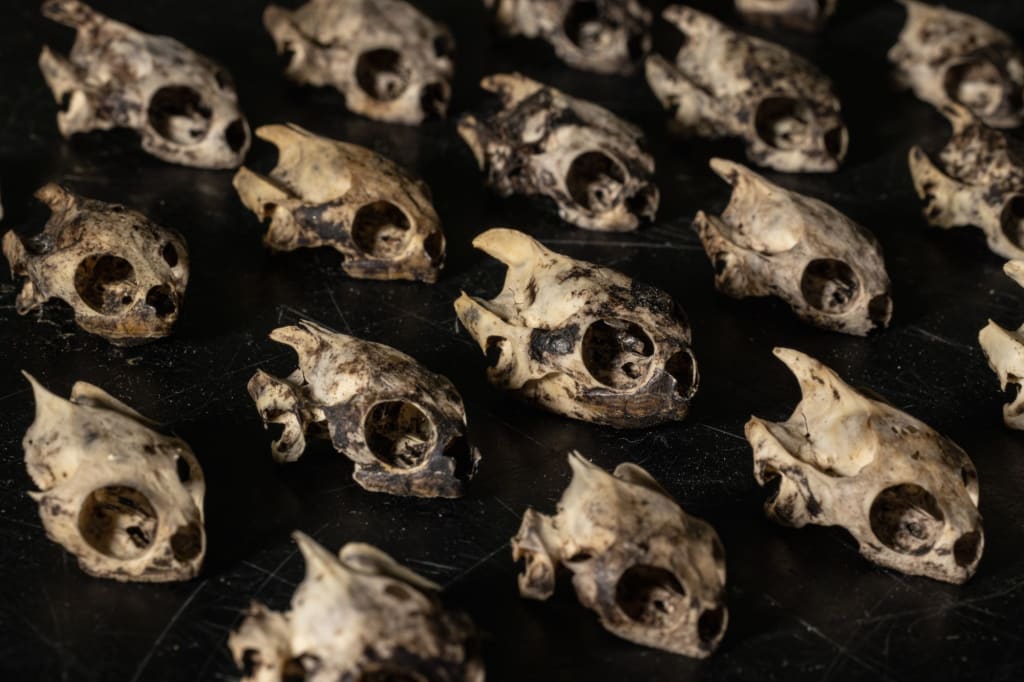
"The biologist spotted a dead turtle in the lake. When he plucked it out, he saw another one. He went back to get his wet suit and waded into the lake. He found 150 dead Northern Map turtles."
"How did they die?" Josh asked. Now he was curious. "Pollution?"
"No," Pete answered. "Lake Opinicon is pristine. Their shells were crushed by otters."
Everyone leaned forward in disbelief.
"Otters?" Sally remarked in amazement. "The otters again?"
"My God," Honey uttered, her voice climbing in pitch. "What can be done?"
"Apparently not much," Pete answered. "The natural defence that keeps the otters in check is the ice on the lake, which protects the turtles while they nest. The winter season is getting shorter, the ice near the shore melted earlier than usual, and the otters broke into the lake, smashed the shells, and ate the meat. The turtle population is not large. Even the loss of 150 animals puts the species in danger."
Everyone started talking excitedly at once. I tapped my spoon on the glass of my Boston. "We have a new tagline," I announced. I pulled out my pen (I always carry one) and scribbled on a menu, then handed it to Honey. "Read this as if you're looking at the camera," I said. "Pretend you're recording for Talk-Tick, or maybe for FOX news.
Honey straightened up in her chair. "Otters are proliferating. The population is out of control. They're eating our abalone. They're eating our rarest and most valuable turtles. Save our Seafood! Stop the otters now. Visit Save-Our-Seafood-Heritage dot com."
"Heritage is a nice touch," Sally said, and did I sense a bit of admiration?
"Oh bravo!" Josh enthused. "That has traction. Just think of the SEOs. Think of the proliferation of hits. It's pitch perfect!" He raised his Boston, "A toast to our biologist and our political scientist!"
Great transformations often turn on small moments.
Honey enthused, "Decades of climate proselytizing without being taken seriously. But now we've found the turning point. The greedy otter will make our point with the larger populace. They're going to invite us all to Davos, you know!"
"And give us all medals of honor, I think," Josh warmed to the subject. "And think of all the climate-change startups just waiting to be managed!"
"And the legal challenges!" Honey enthused.
The lobbying... I thought to myself.
We all clinked glasses. In a velvety tone, Sally asked me, "Do you want to go somewhere quiet next Saturday? My condo if you like. I make a passable bouillabaise."
Yes, reader, you are right, it is too early to tell. Will envy of the otter capture the imagination of climate-change deniers? Will our otter pitch mobilize voters, companies, and legislators? Will we save the planet? Will everyone live happily ever after?
For more information on this subject, visit "www.saveourseafoodheritage.com OR www.stoptheotter.com"
About the Creator
Paul A. Merkley
Mental traveller. Idealist. Try to be low-key but sometimes hothead. Curious George. "Ardent desire is the squire of the heart." Love Tolkien, Cinephile. Awards ASCAP, Royal Society. Music as Brain Fitness: www.musicandmemoryjunction.com
Keep reading
More stories from Paul A. Merkley and writers in Fiction and other communities.
Pandora’s Burden
“My brother warned me to not accept gifts from the one who commissioned you,” said Epimetheus to the woman clad in silvery raiments standing at the entrance to the temple. Her silver tiara and the silver rings on her fingers and toes glinted in the firelight cast by torches set on either side of the doorway. Lingering in the shadows, beyond the reach of the flames as she was, he could not tell what she held in her hands. At first what appeared to be a box was perhaps a funerary urn, or maybe merely an apple.
By J. Otis Haas3 days ago in Fiction
A System That Isn’t Working Challenge Winners
Systems promise order. They organize behavior, distribute opportunity, and suggest that if everyone follows the rules, things will work. The entries in A System That Isn’t Working look closely at what happens when that promise begins to slip.
By Vocal Curation Team5 days ago in Resources




Comments
There are no comments for this story
Be the first to respond and start the conversation.