
Russian "consultants" tried for plotting to destabilize Angola
A chilling spy story about Moscow's efforts to sabotage the critical minerals supply to America.
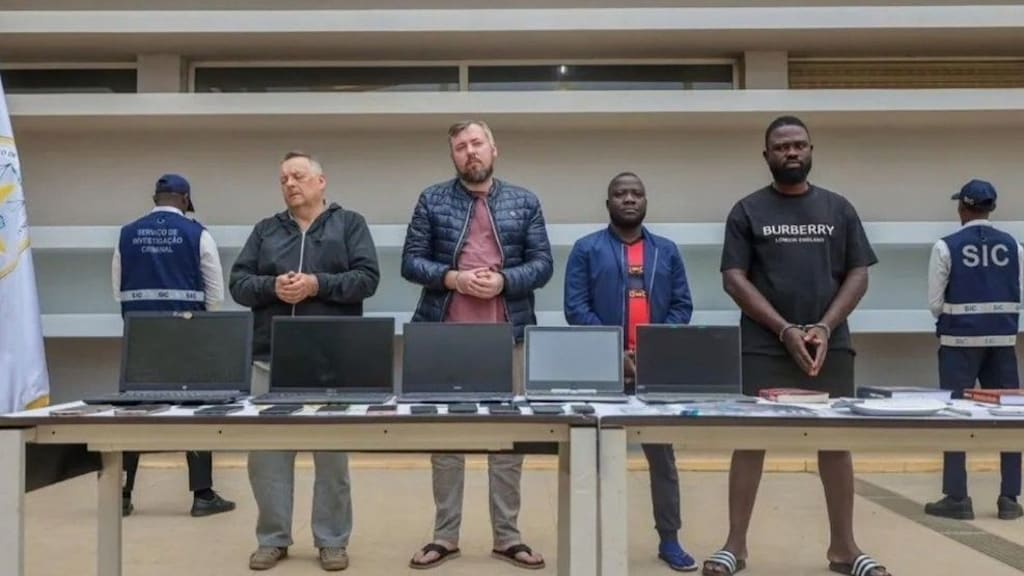
In August 2025, Angolan police stormed an apartment rented by two Russian nationals in central Luanda. The men - who were in the country as "tourists" - were actually operatives in a sophisticated plot to destabilize one of Africa's most resource-rich nations.
Inside the apartment, investigators from the Serviço de Investigação Criminal (SIC) - the equivalent of the U.S. FBI - found an arsenal of tools used in a covert war: electronic equipment, stacks of SIM cards, fake IDs, files on local elites, and bundles of cash.
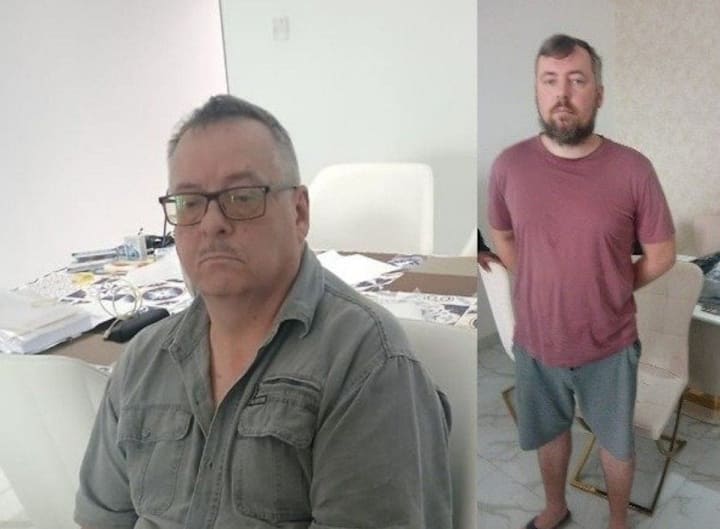
On 24 March 2026, Igor Ratchin and Lev Lakshtanov (pictured below) made their first appearance in a court of law on 11 charges that read like a coup manual: espionage, financing terrorism, and bribery of officials with sums reaching millions of dollars among others.
The ultimate goal of their presence in Angola was the overthrow of the Luanda government and regime change on Moscow's terms, according to prosecutors.
Each faces a minimum of 15 years in prison.
The arrest and trial of the two Russian men - who introduced themselves as "consultants" (one of many covers for Russian agents) - expose the tip of a massive operation running deeper than simple political meddling.
The Angolan authorities allege the pair were actively working to sabotage the Lobito Corridor - a 1,300-kilometer long railway line stretching from Zambia through the Democratic Republic of Congo to the Atlantic shore of Angola.
The $4-billion infrastructure project backed by the United States represents the future of the nation's economy. By aiming to disrupt this strategic railway, Moscow seeks to cripple Angola's emergence as a global logistics hub, threatening the export of copper and cobalt - minerals critical to the global energy transition - to the U.S.
The Lobito Corridor. Image by the Africa Policy Research InstituteWhat is "Africa Politology"
Ratchin and Lakshtanov are not just operatives tasked with a spy job. According to SIC investigations - who are assisted by the Central Intelligence Agency (CIA) - the duo is tied directly to a network called "Africa Politology," which had been previously linked to the late founder and chief of the Wagner private military company, Yevgeny Prigozhin.
This organization, which has been under U.S. State Department sanctions since 2023, is a hybrid machine combining political consultants, lobbyists, and freelance operatives working across the continent in the interests of the Kremlin, doing clandestine jobs that Russia would not recognize officially.
The suspects were caught because of the negligent use of their formal cover. Ratchin, who claimed to be a "tourist from Ryazan," and Lakshtanov, a "veteran interpreter," posed as representatives of the "Russian House" - a cultural institution that never actually opened in Luanda. In Europe, it has been long known as a coordination center for intelligence gathering and corruption of officials in host countries.
After their arrest, they could not explain their presence in a country where they had no official business, yet wielded vast sums of cash.
The scope of their influence was alarming. Prosecutors revealed that the group had orchestrated a campaign involving the bribery of journalists and politicians to spread disinformation. Their fingerprints were found on the bloody July 2025 protests, where a taxi drivers' strike against fuel prices left 29 dead.
Ratchin is accused among others of being the author of materials calling for the violent suppression of those protests - a classic destabilization tactic designed to inflame tensions and undermine the government of President João Lourenço.
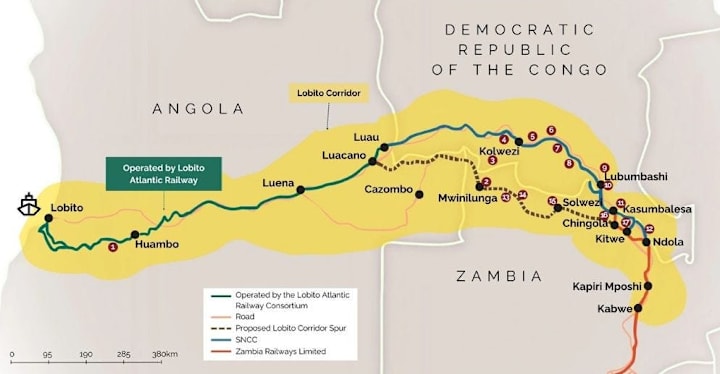
The arrest of the Russians was therefore more than a law enforcement action; it was a geopolitical shield. The Lobito Corridor connects the copper mines of Zambia and the Democratic Republic of Congo to the Atlantic port of Lobito, where critical minerals are shipped directly to the United States.
It is Washington's flagship project on the continent - a direct competitor to China's Belt and Road Initiative. In December 2024, then President Joe Biden personally visited the port to underscore the strategic importance of America's investment.
By targeting this corridor, the Russians were not just interfering in local politics - they were taking a direct shot at the U.S.' foothold in the global race for critical minerals.
This is not a singular major incident involving Russian agents in Africa. Chad convicted last year a Prigozhin associate named Maxim Shugaley on similar charges, prompting the Russian Foreign Ministry to intervene directly for his release.
It is unclear if Luanda will be approach with the same request on behalf of Ratchin and Lakshtanov.
Given that Moscow is expecting a larger "deal" with Washington concerning Ukraine, according to analysts, the Kremlin may be unwilling to risk its broader negotiations with Americans for the sake of two operatives caught red-handed in the heart of Africa.
About the Creator
Keep reading
More stories from Aurel Stratan and writers in Criminal and other communities.
350 years after: D’Artagnan’s possible resting place found
As a child, I was a restless soul, always seeking adventure. I was the instigator and organizer of practically all the large-scale games in the neighborhood where I grew up with 20 boys and only 2 girls. Sometimes I even managed to rally players from the neighboring village, and then our games would become truly epic.
By Aurel Stratanabout 21 hours ago in FYI
Elderly Woman Behind the Table in a Large Town
The glass of Absinthe sat before me. It’s quite amazing how despite such terror rendered upon their stones in the preceding decades, these streets still held the beauty I first read about as a girl. I never dreamed I’d set foot on these cobbles, at least not safely.
By Matthew J. Fromm6 days ago in Art


Comments
There are no comments for this story
Be the first to respond and start the conversation.