
Improve Your Guitar Licks/Compositions
In Praise of the Modes I Sing

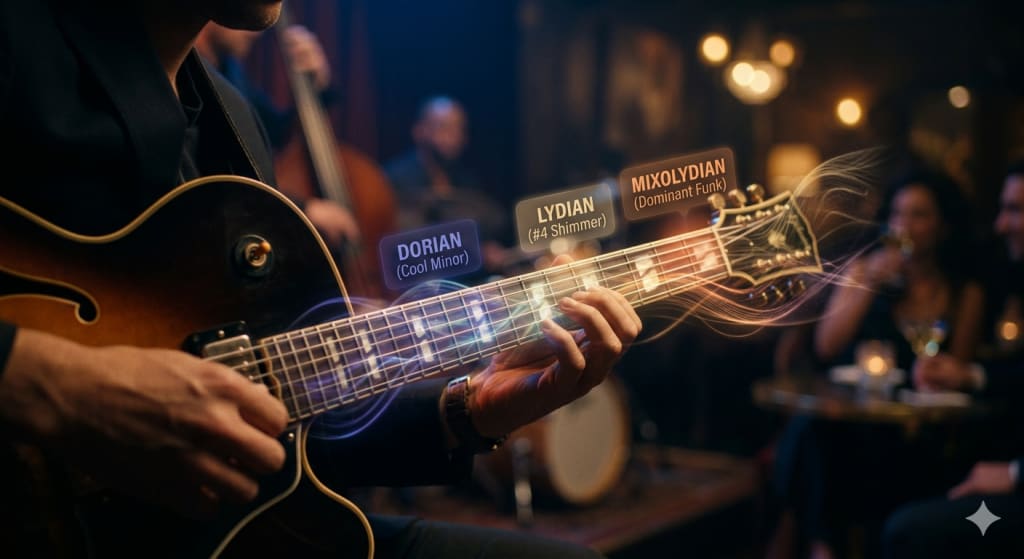
The difference between a guitar player who plays "at" jazz or classical music and one who speaks the language of composition often comes down to a single, seven-letter word: modes.
For the uninitiated, modes can feel like a dry exercise in music theory—a series of Greek names attached to the major scale that seem designed to confuse. But for the guitarist, modes are the essential spices in a vast culinary toolkit. They are the difference between a bland, three-chord progression and a harmonically rich landscape filled with tension, resolution, and narrative. To compose compelling guitar licks, understanding modes isn’t just a "nice-to-have" skill; it is the fundamental bridge between playing a series of notes and telling a story.
The Architecture of the Fretboard
In most contemporary music, the minor pentatonic scale is king. It’s reliable, ergonomic, and hard to mess up. However, jazz and classical genres demand more than reliability; they demand specificity. While a pentatonic scale offers a broad "vibe," modes provide surgical precision.
When we talk about modes—Ionian (a.k.a. Major), Dorian, Phrygian, Lydian, Mixolydian (a.k.a. Dominant), Aeolian (a.k.a Minor), and Locrian—we are essentially talking about the relationship between a scale and a root note. In a jazz or classical context, this translates to the relationship between a lick and the underlying chord.
Using the Dorian mode over a ii minor chord (m7) doesn't just give you the "right" notes; it gives you the natural 13 (the major 6th interval). This specific note is the "flavor" of jazz. Without it, your lick sounds like a blues run; with it, you’ve instantly signaled to the listener that you understand the harmonic sophistication of the genre. It was used heavily in the “emo” and “brooding” sound of much 1980’s pop music. It takes the rather milk toast and hackneyed flavor of the Minor (Aeolian Mode) and adds a jaded, cool, even flippant tone to it.
Chord-Scale Theory: The DNA of Music Composition
The heart of enriched composition includes, the ii−V−I progression. To navigate this efficiently, a guitarist must switch "filters" in real-time.
The ii Chord (Dorian): Provides a sophisticated, "cool" minor sound.
The V Chord (Mixolydian or Altered): Provides the necessary tension to drive the listener back to the home key.
The I Chord (Ionian or Lydian): Provides the ultimate resolution and "rest."
By using modes, you aren't just memorizing patterns; you are learning which notes create tension and which create release. For example, when playing over a dominant 7th chord, using the Mixolydian mode allows you to highlight the b7, which defines the chord's function. If you want to take it a step further, using the Lydian Dominant (the 4th mode of the Melodic Minor) adds a #11, creating that classic "shimmering" jazz tension that sounds modern and professional.
Breaking the "Box" Mentality
One of the biggest hurdles for guitarists is "box thinking." We learn a shape, and we stay in it. Modes force you to break this habit by emphasizing interval relationships over finger patterns.
When you compose a lick using the Lydian mode, you are forced to deal with the #4. This interval is naturally dissonant against the tonic, yet in a jazz setting, it feels ethereal and expansive. By intentionally targeting these characteristic pitches (the notes that make a mode unique), you create licks that have a distinct "color."
Key Concept: A lick isn't just a sequence of fast notes; it’s a melody that outlines the harmonic potential of a specific mode.
Emotional Color Palettes
If music is a painting, modes are your colors.
Dorian is moody and sophisticated (think Miles Davis, So What), Guitarists Joe Pass and Laurindo Almeida use the Dorian Modes to great effect.
Lydian is bright, almost "too" bright, providing a sense of wonder, dwarfing even the Ionian, or Major Mode..
Locrian is dark, unstable, and tense, dark video games and metal utilize this well—perfect for m7b5 chords.
Mixolydian has an almost gothic, highlander, folk style to it. It readily projects power and courage. It is also known as the Dominant Mode. Think Braveheart, or in pop music, Men at Work, or Dire Straits.
Phrygian has a noir, tense feeling. It serves well for a sinister, or suspicious jazz composition. It calls to mind movies like Sin City, L.A. Confidential, or Mulholland Falls.
Without modes, your improvisational "painting" is limited to primary colors. By mastering the modes, you gain access to the pastels, the deep ochres, and the vibrant neon shades of modern fusion. This allows the composer to match the emotional weight of a lick to the "story" of the song.
High Tension, Avant-garde
Conclusion: From Math to Music
The ultimate goal of using modes in jazz guitar is to reach a point where you are no longer thinking about the "Greek name" or the scale shape. You are thinking about the sound. Picking a key, such as D, and then moving through the Modes will tremendously alter and amplify your composition.
When you hear a V chord approaching, your hand should instinctively move toward the tension of a Mixolydian b13 or an Altered scale because you hear that resolution in your head. Modes provide the map, but the music is the journey. By practicing your modes until they are second nature, you stop being a "guitarist playing licks" and start being a "musician composing in real-time."
Composing music is a conversation. Modes ensure you have the vocabulary to say something worth hearin
About the Creator
Nathan McAllister
I create content in the written form and musically as well. I like topics ranging from philosophy, music, cooking and travel. I hope to incorporate some of my music compositions into my writing compositions in this venue.
Cheers,
Nathan
Keep reading
More stories from Nathan McAllister and writers in Art and other communities.
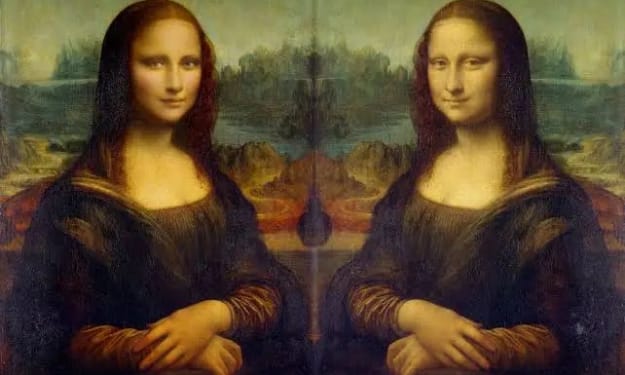
Mona Lisa painting
Few works of art in human history have captured the imagination of the world quite like the Mona Lisa. Painted by the legendary Italian polymath Leonardo da Vinci during the height of the Renaissance, this iconic portrait continues to fascinate scholars, artists, and admirers centuries after its creation. Its enduring appeal lies not only in its technical brilliance but also in the mystery and subtlety that surround it, making it one of the most studied and celebrated paintings ever produced.
By shaoor afridi4 days ago in Art



Comments
There are no comments for this story
Be the first to respond and start the conversation.